Roaming
Roaming data on a boat in Europe: the rules, the traps and the cruising areas
EU roaming sounds simple until you spend a summer afloat. Here is what the rules really say, the two traps that catch sailors every season and how coverage differs between cruising areas.

Since 2017 you can use your phone across the EU at home prices. For a week in Croatia that is all you need to know. For a boat that spends months in other countries, the small print starts to matter.
What "roam like at home" actually covers
The EU rules apply in the EU countries plus Norway, Iceland and Liechtenstein. They do not automatically cover the UK, Switzerland, Turkey or Monaco, which many cruising routes pass. And they allow your operator to apply a fair use policy to data. In practice many home subscriptions give you a fixed number of gigabytes abroad, sometimes far fewer than you have at home.
There is a second rule that catches liveaboards. If, over a period of four months, you use your phone more abroad than at home and spend more days abroad, your operator may start charging a roaming surcharge. That is fair for them and expensive for you.
The cruise ship trap
Large ferries and cruise ships carry their own mobile network linked to satellite. Anchor near one, or follow it out of the harbour, and your phone can connect to that network instead of the land masts. It is billed outside EU roaming and can cost a lot per megabyte. Turn off data roaming on personal phones and let the router, with a data SIM, handle the internet. Most routers also let you lock to land networks.
Why a roaming data SIM works better on a boat
A data SIM made for roaming is not tied to one network in each country. The router can use the strongest operator where you are, which matters when one network has a mast on the headland and another does not. You choose a data package when you need it instead of paying monthly, and the SIM works in the EU plus the UK, Switzerland and Turkey. Check the country list on the product page before you go, as it can be updated.
If your boat is based in Spain for long periods, the Spain Special SIM combines a European data allowance with a much larger allowance for use in Spain.
Coverage in popular cruising areas
- Balearics and the Spanish coast: generally good along the coast and in the main anchorages, weaker in a few deep calas with high cliffs on both sides.
- Croatia: the inhabited islands are well covered. Expect gaps in narrow channels between uninhabited islands and in some national park bays.
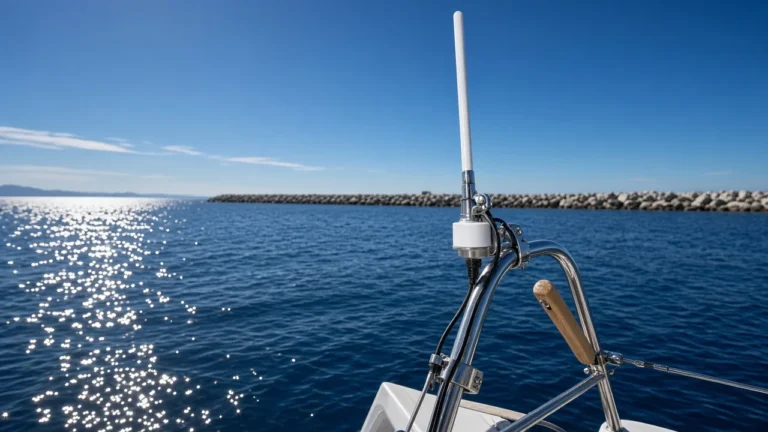
- Greece: good near villages and ports, patchier in remote anchorages. An external antenna makes a noticeable difference here.
- French and Italian Riviera: strong coverage, but crowded in high season. Evenings in popular bays can be slow on every network.
- Scandinavian archipelagos: surprisingly good, even among small skerries, thanks to masts on many of the larger islands.
Coverage maps from operators show land coverage. At sea, assume that what you see on the map reaches roughly 10 to 15 kilometres out, more with a good antenna.
Next steps: work out how much data you need and read how to set up internet on board.
Frequently asked questions
Does EU roaming work in the UK and Switzerland?
Not automatically. Many home subscriptions charge extra there. Our roaming SIM covers the EU plus the UK, Switzerland and Turkey.
Can my operator charge me for roaming in the EU?
Yes, if you mainly use your phone abroad over a four month period, your operator may add a roaming surcharge under the EU fair use rules.
Why did my phone bill jump near a cruise ship?
Your phone probably connected to the ship's satellite network. Those networks are billed outside EU roaming. Turn off data roaming on the phone and use the router instead.